Magic Bow
Friday, 17th May 2024|7:00 pm EDT
| $30.00PEGGY R. MCCONNELL ARTS CENTER OF WORTHINGTON & DHVANI PRESENT
Based on the compositions of Vidwan Lalgudi Jayaraman
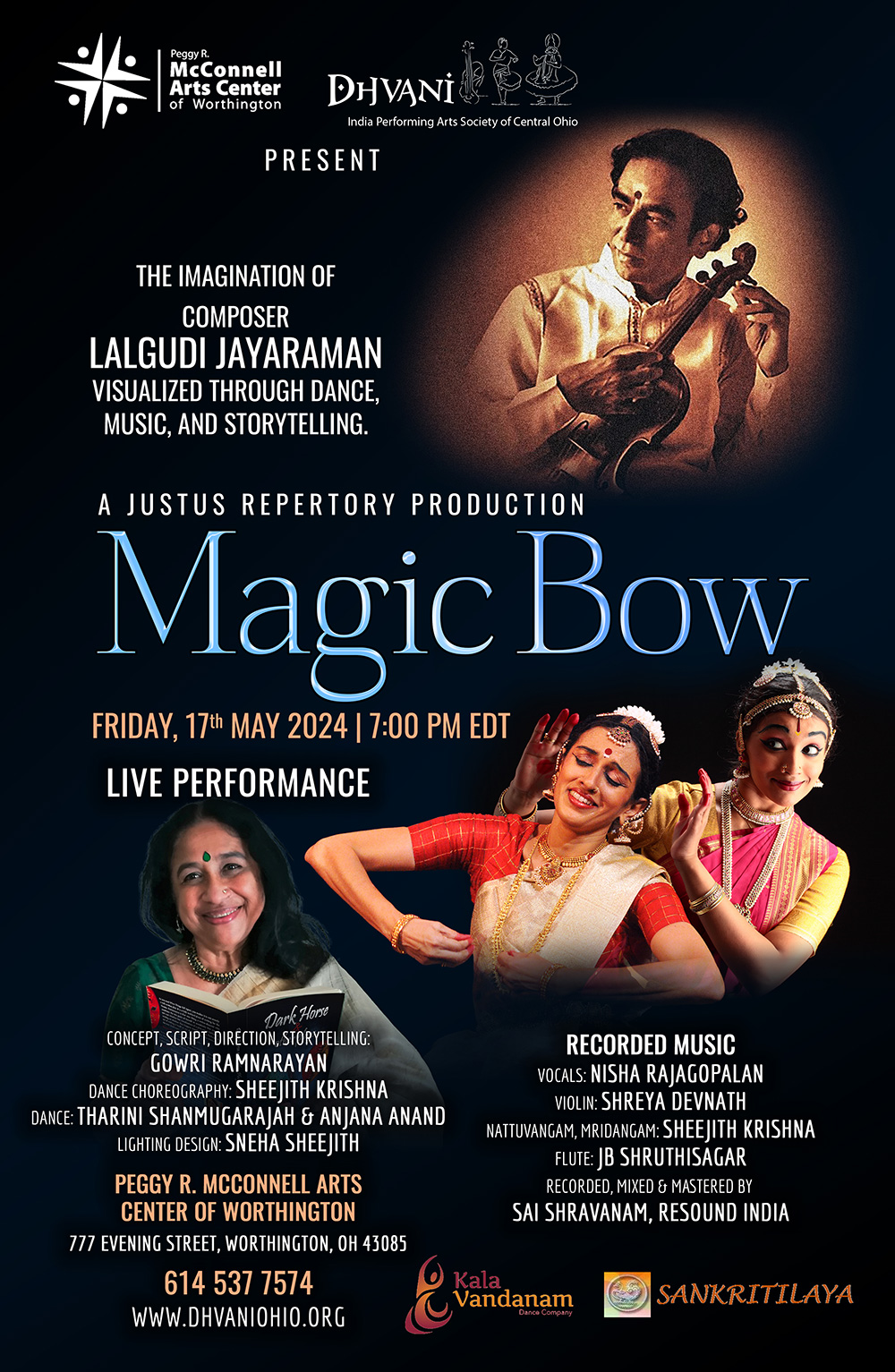
LIVE PERFORMANCE
Concept, script, direction, storytelling: Gowri Ramnarayan
Choreography Design: Gowri Ramnarayan
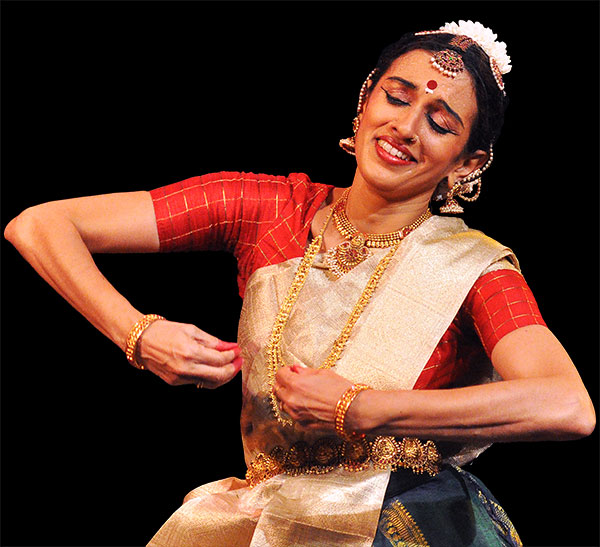
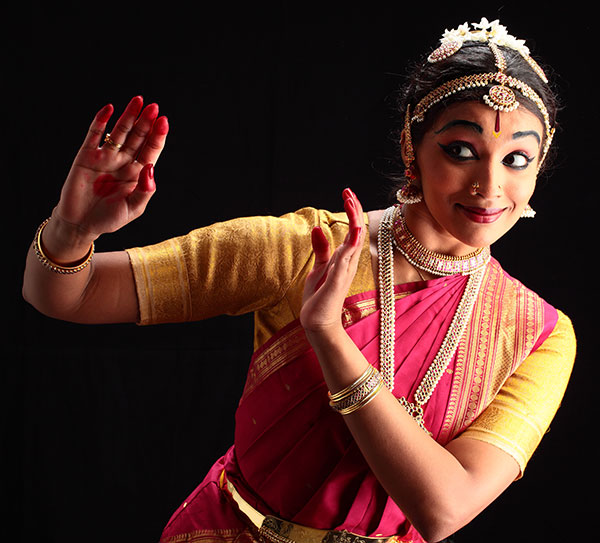
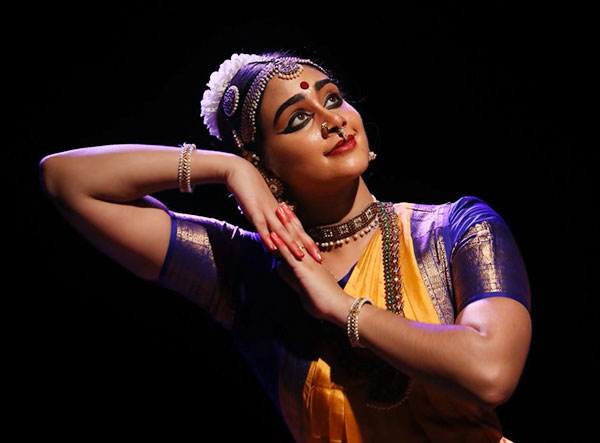
dance: Anjana Anand, Tharini Shanmugarajah and Bhavya Kumaran
lighting design: Sneha Sheejith
RECORDED MUSIC
vocals: Nisha Rajagopalan | violin: Shreya Devnath | flute: JB Shruthisagar
nattuvangam, mridangam: Sheejith Krishna
recorded, mixed & mastered by Sai Shravanam, Resound India
Yamuna Kalyani Thillana by Lalgudi Jayaraman, choreographed and performed by local dance teachers:
Smitha Magal, Ami Majmudar, Brinda Ramasubramanian, Priya Gajaananan, Sukanya Chand and Suneetha Ravindran.
Recording Credits
Ashwath Narayanan – vocal
Sheejith Krishna – nattuvangam & mridangam
Easwar Ramakrishnan – violin
JB Shruthi Sagar – flute
Recorded, mixed & mastered – Rakesh Pazhedum, Sahrdaya Sound Studio
Concept, Script, Direction, Design
Gowri Ramnarayan
Lalgudi Jayaraman (1930-2013) had a unique attribute: a visual imagination. He painted characters and settings on his mindscreen as he composed his music. His compositions became the auditory forms of the visual scenarios he imagined. He found greater freedom to do this by opting for ragas never used before for the genres he chose.
That is how his jatiswaram in Raga Rasikapriya depicts a shipwrecked couple exploring an uninhabited island, the varnam in Charukesi follows a woman deluded into playing hide- and-seek with the lover – who has never left her side! The tillana in Pahadi has a God dancing on the mountain, protecting nature and the environment, to nourish body and soul.
My script and directorial design grew out of listening to the master bowman’s music from childhood. My understanding acquired more dimensions when I interviewed him and reviewed his concerts as a critic (The Hindu). Now JustUs Repertory combines dance, music and storytelling to recreate the visual scenarios for the music as imagined by the composer. We also roam with him through the village scenes of his childhood which inspired him in his life and music.
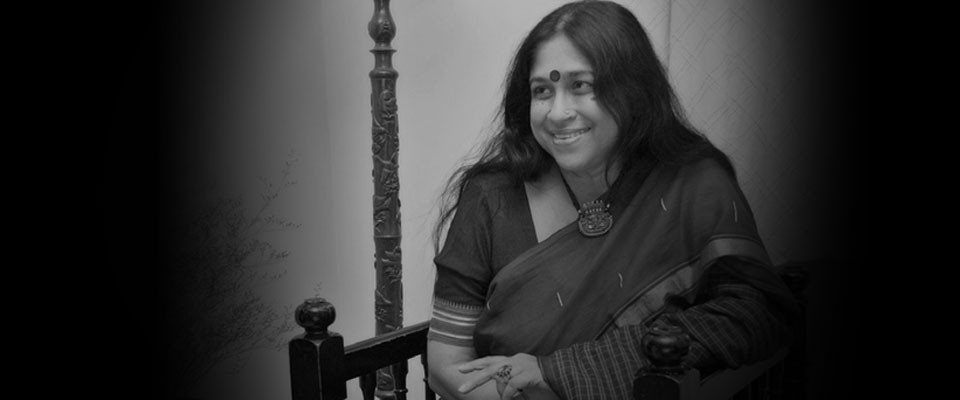
Gowri Ramnarayan

Playwright, theatre director, translator, journalist (formerly Deputy Editor, The Hindu), Dr Gowri Ramnarayan vocally accompanied the legendary Carnatic musician MS Subbulakshmi, authored and translated books, published Dark Horse, an anthology of her plays, and served on the Fipresci Jury at international film festivals. She is now Artistic Director, JustUs Repertory, Chairperson, Rukmini Devi Arundale Trust, and Adjunct Faculty, Asian College of Journalism, Chennai.
Anjana Anand

An alumna of SIFAS, Singapore, and Kalakshetra Foundation, India, Bharatanatyam dancer Anjana Anand is now a founder/faculty member of Sahrdaya Foundation. Serving on the guest faculty of Milapfest Dance Intensive camps (UK, Singapore) and Navadarshana (US), Anjana has authored A Grammar of Dance, based on the Tamil epic Silappathikaram.
Tharini Shanmugarajah

Tharini Shanmugarajah embodies the rich legacy of Bharatanatyam, steeped in tradition yet dynamically evolving with each performance. Hailing from a lineage of esteemed dancers and educators, Tharini’s journey into the world of dance was nurtured by her mother, Kalyani Shanmugarajah, a dedicated disciple of the renowned Sarada Hoffman, revered for her mastery of the Kalakshetra style. Since 2008, Tharini has been under the tutelage of her guru and mentor, Sri. Sheejith Krishna, Director of the Sahrdaya Foundation in Chennai, whose guidance has shaped her artistic expression and refined her technique.
Tharini is a passionate advocate for dance education and preservation, serving as the co-director of the Kalapeetham School of Dance in Los Angeles. Her dedication shines through as she imparts the intricacies of Bharatanatyam to eager students, nurturing a new generation of dancers within the Kalapeetham family.
Tharini’s artistic prowess has graced prestigious stages worldwide, leaving an indelible mark on audiences. From her solo performance at the esteemed Spirit of Youth Festival in Madras to collaborations with renowned artists like Mythili Prakash for the world premiere of “MARA” at the Ford Amphitheatre in Hollywood, Tharini’s artistry transcends borders. Her duet performances alongside Sheejith Krishna have garnered acclaim across the U.S. and Canada, showcasing the seamless fusion of tradition and innovation. Additionally, her involvement in productions such as Sheejith Krishna’s “Don Quixote,” which toured the U.S. highlights her versatility and commitment to excellence.
Beyond Bharatanatyam, Tharini’s artistic journey has been enriched by her exploration of ballet and Carnatic music, embodying a holistic approach to her craft. Her academic pursuits further underscore her dedication, holding a Bachelor of Science degree in Kinesiology with an emphasis in dance from California State University Northridge.
Bhavya Kumaran

Bhavya Kumaran is an Indian American dancer and choreographer of the classical South Indian art form, Bharatanatyam. Often praised for her perfect form (arai-mandi), svelte movements, and sense of rhythm, Bhavya is a celebrated and respected young dancer of today.
Born and raised in Chicago, in an extended family of performing artistes, Bhavya started learning the art form at the age of four from her mother Sowmya Kumaran, founder and artistic director of Nrithya Sangeeth, a school for performing arts. She had her “ascending the stage” (arangetram) solo performance in Chennai (2011), and since then has been regularly performing solos and duets with her mother, at prestigious venues across the US and India. Her unbridled enthusiasm for the art form is visible in her performances and captivates audiences. Bhavya currently also receives guidance from senior dancer and choreographer Lavanya Ananth.
Bhavya’s extensive performance experience includes essaying diverse roles in several Natya Natakams (thematic dance plays) under the direction of renowned choreographers from India and US. She herself has choreographed and staged dance productions on various platforms investing in creating innovative, exciting choreographies that appeal to the younger generation of dancers without forsaking the traditional principles of the dance form. She is an original member of Anubhava Dance Company, a team of North American born dancers who stage performances regularly.
Bhavya is the recipient of a number of awards and accolades. She won the Sri Gutty Vasu Memorial prize at the Spirit of Youth dance festival (2022) conducted by the Madras Music Academy. She is the youngest winner of the Sri Vazhuvoor Ramaiah Pillai award given to the best dancer in the Cleveland Aradhana dance competition (2012). She has been conferred the titles of Natya Chudar (2022), Yuva Kala Bharathi (2017), Taruni Kala Vipanchee (2014) by different India based premier dance organizations to highlight her contributions to the performing arts.
A REVIEW
By Leela Venkatraman From Rupa Srikanth, dance critic, The Hindu
NARTHAKI, Feb 10, 2023
https://narthaki.com/info/taalam/taalam159.html
A RESPONSE
From Rupa Srikanth, dance critic, The Hindu
This is a startling concept- what does a composer think of while creating? The visual picture of the gods, nature… For the great composers of the past, we will never know. But for a genius who lived during our time, violin maestro Lalgudi Jayaraman, we have a window for some compositions – through the notes of a contemporary, a musician- journalist of The Hindu, Gowri Ramnarayan, acquired during multiple interviews with him.
Gowri not only unearthed her notes, but wrote a script and directed a Justus Repertory-produced visual musical, ‘The Magic Bow’. With Bharatanatyam as the base, Sheejith Krishna choreographed the visually-faithful pieces in a delightfully new way.
Would it be wrong to say that Gowri has spoilt us forever? The ‘Magic’ was ethereal. It had a star-studded cast – the music, with vocals by Nisha Rajagopalan, the violin accompaniment by the maestro Jayaraman’s disciple, Shreya Devnath, flute by Vishnu Vijay, while the percussion by Sheejith Krishna was sublime, as was the dancing by Anjana Anand and Sheejith; the dance visualisation was unconventional and certainly exciting.
Gowri shared the visual memory behind each composition through the evening with her customary enthusiasm. It is well- known that Jayaraman explored off beat ragas in his compositions. It is also well-known that his varnams and thillanas enriched the Bharatanatyam repertoire with their inbuilt rhythms and uncommon melodies.
‘The dissonant notes sent a warning signal,’ said Gowri, while explaining the visuals that Jayaraman imagined during the composing of the Rasikapriya jatiswaram in Rasikapriya, set in Adi tala. The boat with a pair of young lovers crash onto an unknown island. The vivid visualisation, mainly through the body language of angika abhinaya, painted dark clouds, rain and the capsizing boat. The slowly spun out pallavi with emphasis on the shatshruti daivatam, set the mood. The faster charanams captured the lovers struggling to get to the shore, their tender embrace, their sighting another vessel, and the final happy ending.
The padavarnam ‘Innam en manam’ using a gently rebuking tone in raga Charukesi, (Adi), is usually interpreted literally. ‘Do you behave as if you have not understood me? O Madhava? Is this a pre-planned act?’ Gowri preferred a spiritual interpretation- of humans getting lost in illusions, when god is in and around us and discernible in heightened moments of awareness. Finally the protagonist realises the truth (of her oneness with Krishna) and plays the flute as Krishna himself.
Sheejith’s visualisation was true to this vision. Krishna was beside the pining woman, all the time, teasing her and playing with her. But in a state of unknowing, her seeking continues. She feels his presence one moment; it’s gone in the next. The dramatisation was enhanced by the clever use of spot lighting creating a seemingly impenetrable circle that Krishna is in. The nritta was crisp, undistracting, as pauses within the melody.
The dance music was outstanding. As a concert vocalist, Nisha Rajagopalan is unused to singing neraval with constraints on her freedom, but her slow deliberate singing was beautiful. The mood music, washes over you completely in the dark, absorbing the senses. The whole experience was poetic.
Most endearing was the recreation of Vidwan Jayaraman’s childhood in the village of Lalgudi, the sights and sounds that stayed with him and inspired him all his life. A ragamalika ragam-tanam followed by Tyagaraja’s Lalgudi pancharatna kriti in Kambhoji, ‘Mahita pravriddha’. The instrumental music was beautifully planned, as the little boy enjoyed playing in the fields, surrounded by cows with bells on their neck and women workers with anklets on their feet. He goes into a temple and sits down to pray as the song is danced before the Goddess, Shrimati.
A thillana in raga Pahadi set in misra chapu talam, reminding the composer of the hills, and a Thirupugazh in raga Hamir Kalyani, completed the programme.
What a treat!